Build an education website
You can build an education website without writing code: describe your school, your courses or your classes and who they are for, and Fabricate builds a working site with courses and timetables, your teachers, fees, news and an enquiry or trial lesson form, and once it is published each request reaches you by email and under Responses in Fabricate.
Ask for a sign-in for students or parents later in the same chat. Try it with a test enquiry first, then ask for changes.
- Free plan: 60 credits a month
- No card needed
- Live link included
From one message to an education website
Then try it yourself and ask for changes in the same chat until it fits.
You write: A website for my tutoring centre for ages 8 to 18. It shows our subjects and levels, each tutor with their subjects and a photo, our weekly times and our packages. Parents request a free trial lesson with the student's name, grade and subject, a preferred date and time, and their email. Make it easy to use on a phone.
 Fabricate
I built your tutoring centre website: subjects and levels, a page for each tutor, your weekly times and packages, and a trial lesson request form with the student's grade, the subject and a preferred date and time. Send a test request in the preview.
Then ask for changes, such as
- Add a parent sign-in
- Add term dates
- Add answers for parents
A whole new app usually takes about 20 to 35 credits.
Northstar Tutoring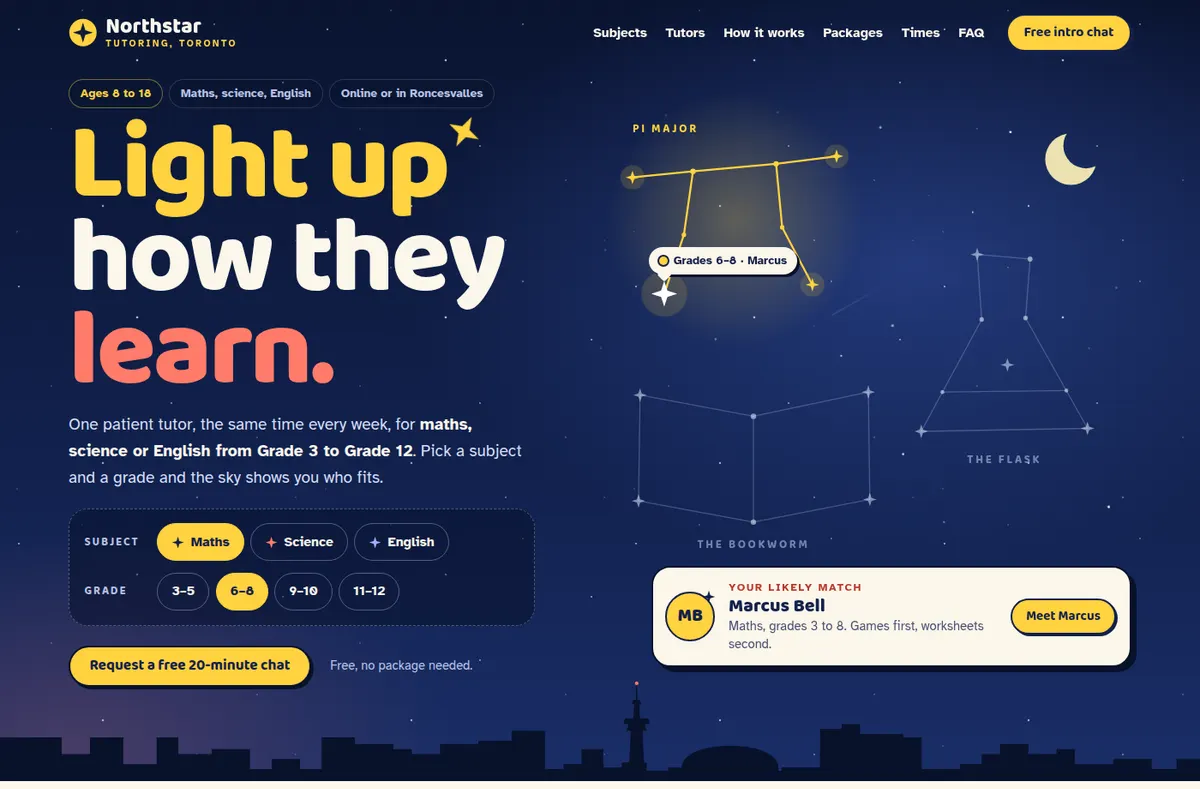
Who builds an education website
Tutors and tutoring teams
Subjects, levels, times and a trial lesson request.
Language and music schools
Courses by level, timetables and placement requests.
Small schools and nurseries
Admissions, news, term dates and a visit request.
Workshops and adult classes
Courses with dates, places left and sign-ups.
What your education website comes with
Courses and levels
Each course with who it is for, what it covers, the dates and the fee.
Timetables
Classes by day and time, filtered by level or subject.
Teachers
Each teacher with their subjects, experience and a photo.
Enquiries and trial lessons
A form for an enquiry, a trial lesson or a visit, with a preferred date.
A student or parent area
Ask for a sign-in where students or parents see their own lessons and notes.
Course fees
On Pro and Max, fees paid by card through Stripe Checkout into your own Stripe account.
In short
- An education website with courses, timetables, teachers, fees and a trial lesson form can be built from a plain-English description
- Once it is live, each request reaches you by email and under Responses; on Pro and Max, families can get a confirmation and a reminder
- Newsletters to every family and sync with a school system are not built in
What goes into an education website built with Fabricate
Parents and students look for the same few things: what you teach, for whom, when, how much, and how to start. School website platforms are built for large schools with many staff. An education website built with Fabricate starts from your description of your courses or classes and the people they are for.
Courses and people: each course or subject with the level, what it covers, the dates and the fee, a timetable filtered by level or subject, and a page for each teacher. Ask for term dates, news, a gallery or a page about how a first lesson works.
Starting: an enquiry, trial lesson or visit request with a preferred date and time. Once the site is published, each request reaches you by email and under Responses in Fabricate, and on Pro and Max the family can get a confirmation and a reminder. On Pro and Max, fees can be paid by card into your own Stripe account.
Growing it: a sign-in for students or parents, homework and progress notes, or lessons and quizzes can be added later in the same chat. Emails to every family, such as newsletters and term reminders, and sync with a school system are not built in.
Education websites you can start from
Choose one and the builder opens with its description filled in. Change any word before you build.
- TutoringSubjects, tutors, times and a trial lesson request.
- Language schoolCourses by level, a timetable and a placement request.
- Music schoolInstruments, teachers, fees and a sign-up form.
- NurseryRooms, the day, fees and a visit request.
Or start from a template
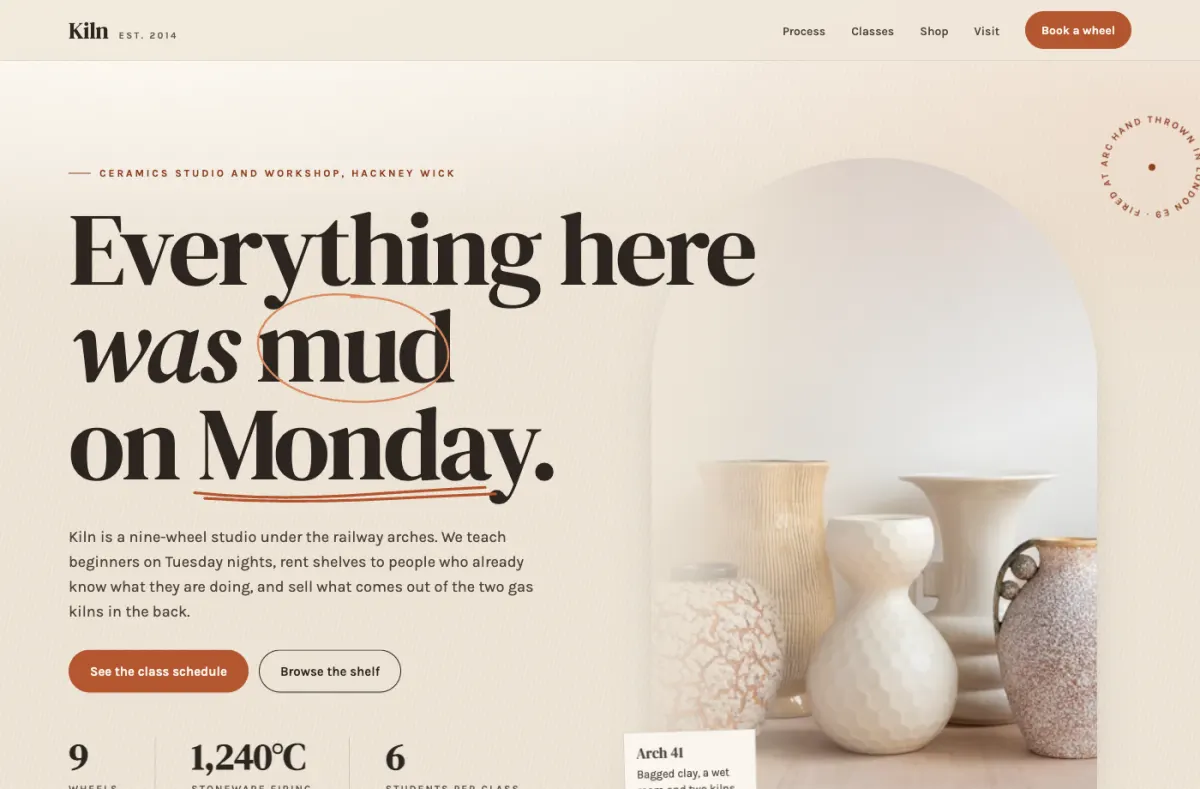
Kiln
A maker's website where each class shows its places left and the shelf lists what is made to order, ready to change into your own classes.
How to build an education website
Four steps, all in one chat.
- 1Describe your school or classes
What you teach, for whom, when, and how families start.
- 2Send a test request
Ask for a trial lesson in the preview and check what you receive.
- 3Ask for changes
Add a page, a field or a colour by asking in the same chat.
- 4Publish it
The live app starts with a fresh database, so your test entries stay behind.
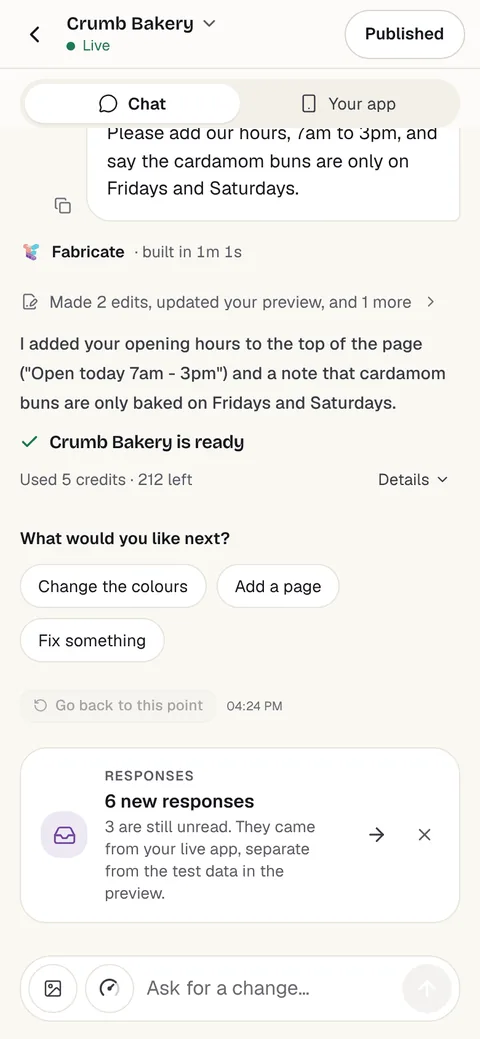
Chat
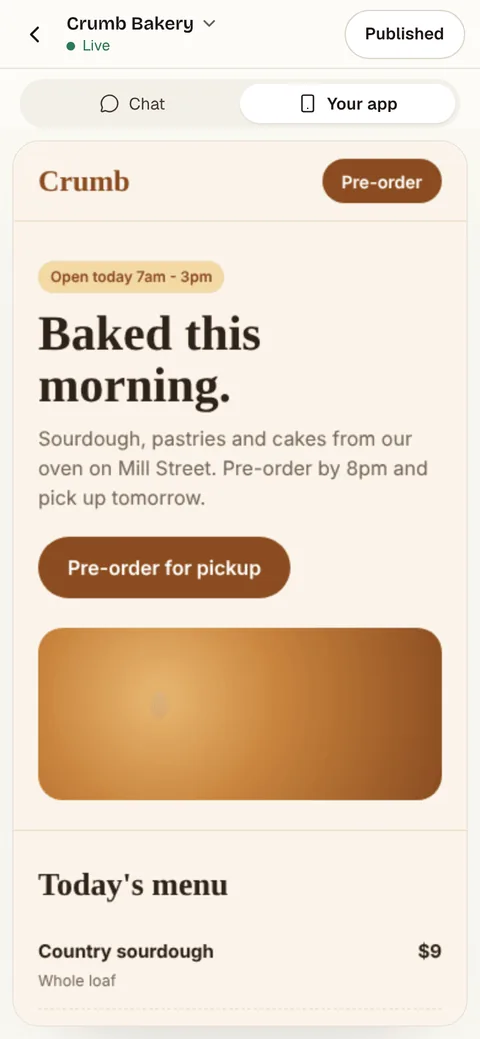
Your app
Once it is live
Every trial lesson request lands in one place
Once your app is published, every trial lesson request the family sends through it is kept under Responses in Fabricate, and you get an email for each one, up to a daily limit. You can download them all as a CSV file.
On Pro and Max, you can also turn on a confirmation email to the family and a reminder email 24 hours before the date, again up to a daily limit.
Fabricate does not send text messages.
Trial lesson
- Student
- Ava, Grade 7
- Subject
- Maths
- Date and time
- Tuesday, 4:30 pm
- k.morgan@example.com
- Email to youFor each new trial lesson request, up to a daily limit.
- Confirmation to the familyOn Pro and Max, once you turn it on.
- Reminder email24 hours before, on Pro and Max.
- Free60 credits a monthBuild, preview and publish. No card needed.
- A new app20 to 35 creditsA small change is about 3 to 10 credits.
- Pro350 credits a monthA live link and your own domain. Prices are on the pricing page.
Questions about education websites
- Can I build an education website without coding?
- Yes. Describe what you teach, for whom and when, and Fabricate builds the education website and shows it working in a preview. To change something, you ask in the chat. There is no code to write or read.
- Can parents book a trial lesson?
- Yes, as a request with a preferred date and time. Once the site is published, each request reaches you by email and under Responses in Fabricate, and on Pro and Max you can turn on a confirmation email and a reminder 24 hours before.
- Can students or parents sign in?
- Yes, if you ask for it. People sign in with an email address and a password. On Pro and Max, a published app also sends the emails that confirm an address and reset a password. Google and social sign-in are not built in. Ask for an invite code so only your students or their parents can join, and keep anything about children behind it.
- Can students upload homework?
- Yes. People can upload photos and documents on every plan, up to your plan's storage. Photos can be shown in the app; documents stay private, for you to open in Fabricate. If several teachers need to read the work in the app itself, ask for answers typed into the app instead.
- Can I take course fees online?
- On Pro and Max, the app can take card payments through Stripe Checkout, paid into your own Stripe account, which you connect under More > Payments. Ask for a fee per course or a monthly fee for lessons.
- Can it hold lessons and quizzes too?
- It can. An education website is usually the public side: courses, timetables, teachers and enquiries. The course platform page covers lessons, quizzes and progress for students who sign in.
- Can it use our own domain?
- Yes, on Pro and Max. On Free, a published app gets its own free address on fabricate.chat.
- What does it cost?
- You can start on Free, which includes 60 credits a month and needs no card. A whole new app usually takes about 20 to 35 credits and a small change about 3 to 10 credits. Current plans are on the pricing page.
Keep reading
Every Build page- Build an Online Course PlatformLessons, quizzes and progress for your students.Build it
- Build a Booking AppA booking page for customers and a schedule for you.Build it
- Build an Event WebsiteEvent pages with registration and a guest list.Build it
- Apps for TutorsLesson booking, progress notes and homework for your students.For you
- Apps for Driving SchoolsLesson requests, pupils and progress in one app.For you
- PaymentsCard payments in your app through your own Stripe account.Feature
Start your education website
Describe what you teach and for whom. Try a test request, then share the link.
Build free. No card needed.
Related pages
Create a job board website
Describe your jobs and Fabricate builds a job board website: job posts, search, applications and an employer sign-in. Fr...
Read moreBuild a fitness website for your gym or classes
Describe your gym or classes and Fabricate builds a fitness website: timetable, coaches, memberships and class bookings....
Read moreBuild a nonprofit website
Describe your cause and Fabricate builds a nonprofit website: your work, your impact, volunteer sign-ups and a donate bu...
Read moreBuild a crypto website for your Web3 project
Describe your project and Fabricate builds a crypto website: the roadmap, the team, live prices and a sign-up form. Free...
Read moreEverything You Can Build
Explore use cases, from MVPs to marketplaces.
Read moreAI App Builder
Describe your app and get a frontend, database, logins and a live URL in minutes.
Read more